




(86)18948294956 (86)18928325808

 Add time:2026-06-11
 clicks:
 The support structures for circular guide rail conveyor systems are primarily categorized into two types: base plate structures and profiled beam structures. Both provide essential stability and support for the guide rail system. When selecting a support structure, priority should be given to its suitability for the specific application, while cost considerations remain secondary.
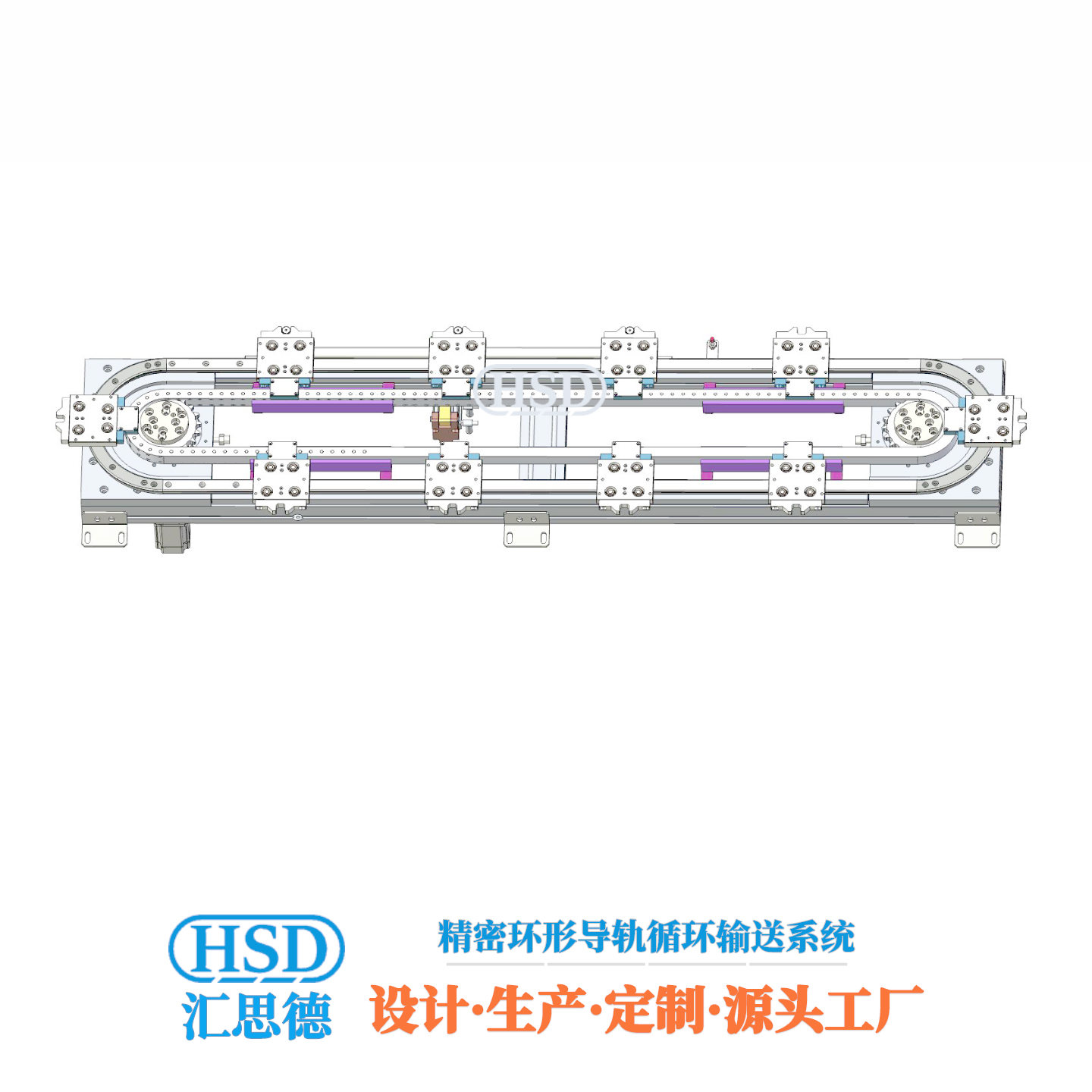
Circular guide rail conveyors featuring a profiled beam structure offer several distinct benefits:
1.
Efficient Space Utilization
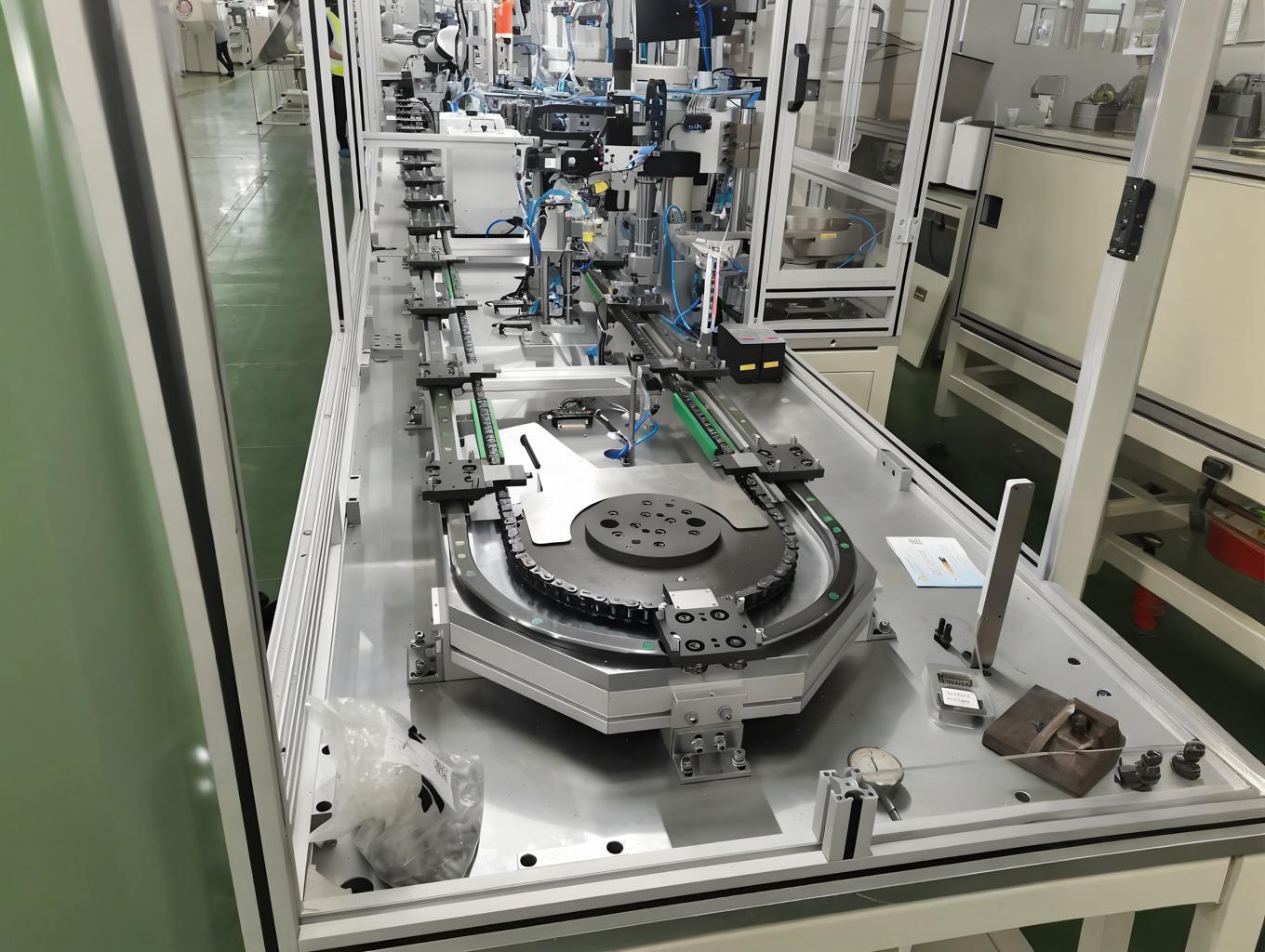
The system occupies minimal footprint while leaving ample central area free for installing additional automation equipment or serving as an operational zone. This design is particularly suitable for automated production lines requiring collaborative operation among multiple devices.
2.
Simple and Quick Installation
The use of lightweight profiles reduces overall system weight, facilitating straightforward installation—even for large-scale setups, which can often be handled by a single operator. Compared to base plate structures, profiled beam designs shorten production and delivery lead times and ease transportation and reinstallation processes.
3.
Broad Applicability
These conveyors are well-suited for light-load, high-speed, and high-precision automated production lines. The typical load per station does not exceed 15 kg, with repeat positioning accuracy reaching ±0.05 mm. They are widely employed in various industries, including automotive components, renewable energy batteries, digital electronics, medical devices, and consumer goods.
4.
High Cost-Effectiveness
The adoption of profiled beams leads to overall material cost savings, which becomes particularly significant in large-scale conveyor systems. As a result, profiled beam circular guide rail conveyors are extensively utilized in automated transportation systems due to their favorable cost-performance ratio.
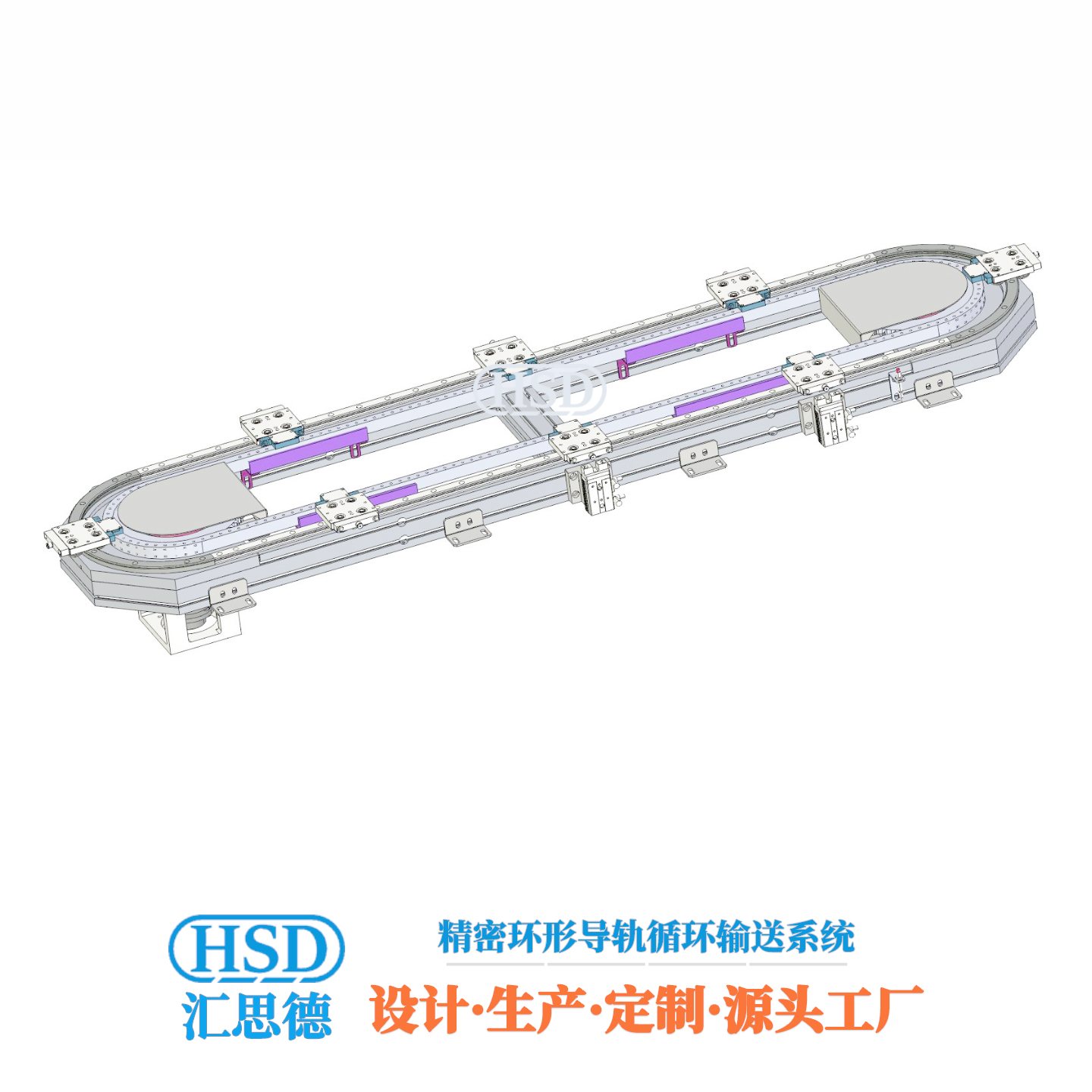
In summary, profiled beam circular guide rail conveyors excel in space efficiency, installation convenience, application versatility, and cost-effectiveness. However, they are not suitable for heavy-load applications or scenarios demanding exceptionally high stability.
It should be noted that profiled beam structures are generally compatible with 25-series guide rails. In certain cases, 44-series guide rails may also be used, whereas 76-series guide rails require a base plate structure. The selection of an appropriate support structure should be based on specific application requirements.

 Previous:
 BACK
BACK