1.0 Introduction & Definition
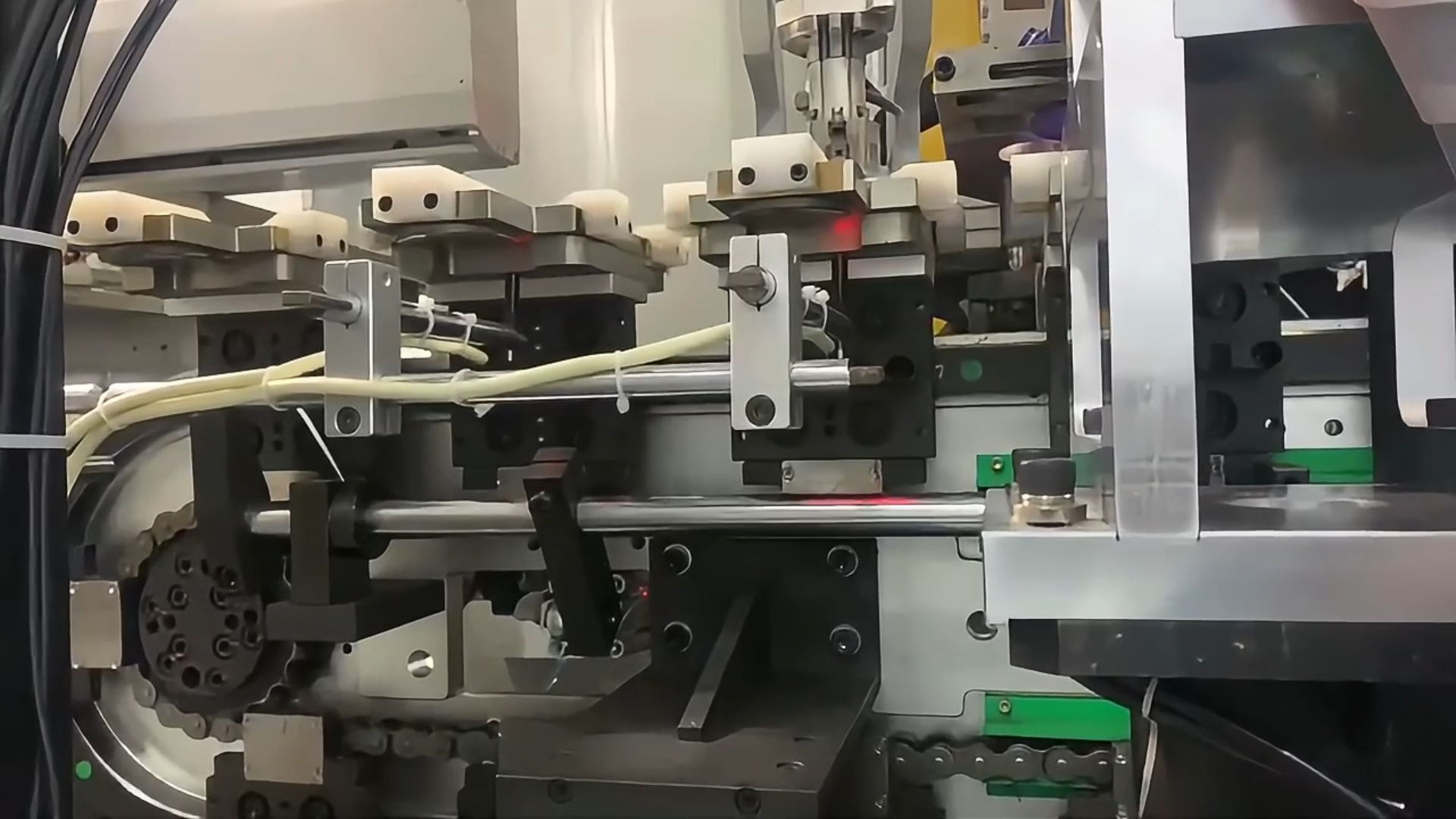
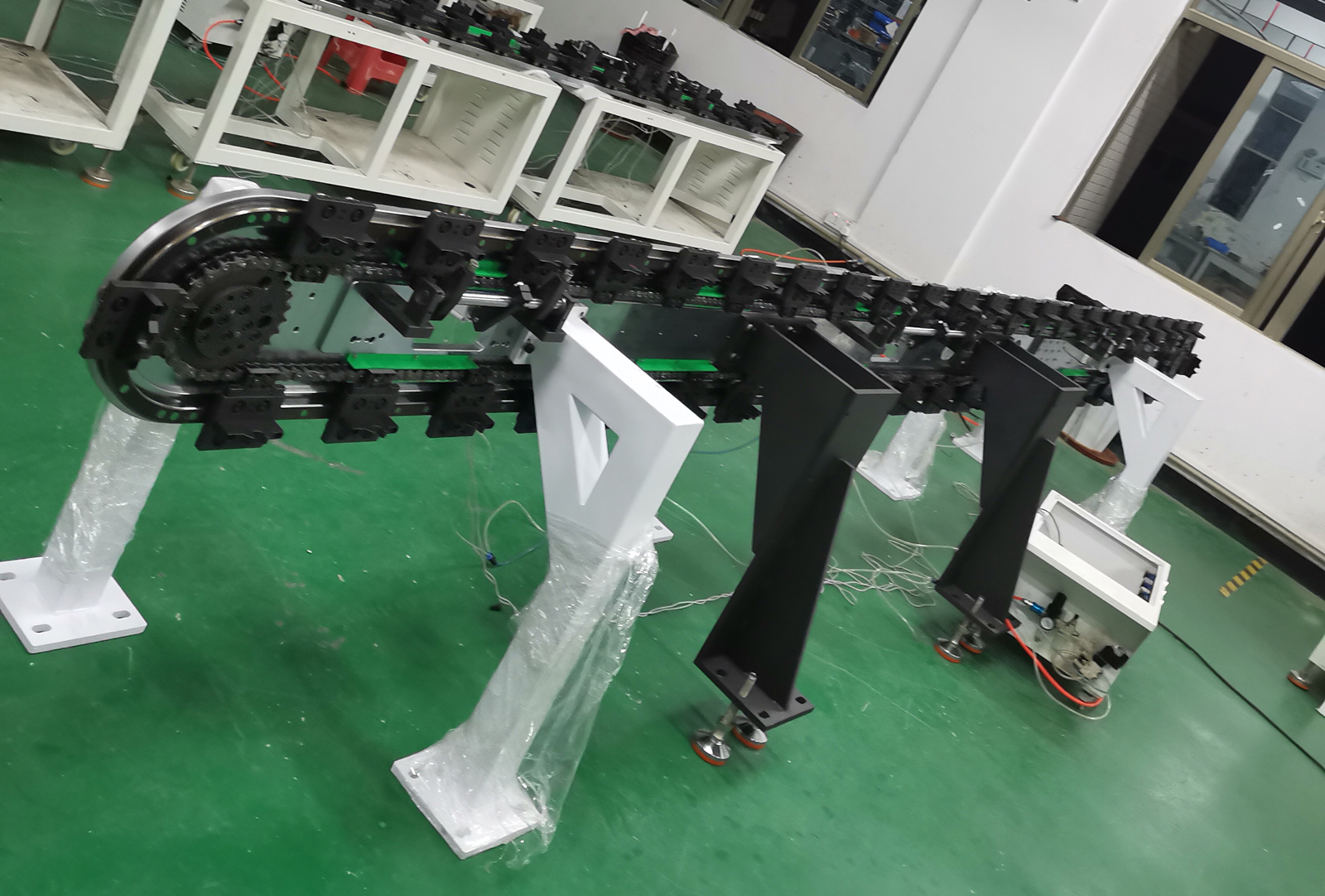
A Vertical Circulating Rail (VCR) System, also referred to as a vertical closed-loop track system, is a specialized material handling solution engineered for vertical-axis installation. Its fundamental advantage resides in its innovative three-dimensional spatial configuration, which enables the deployment of conveying paths at customizable inclinations. Characterized by high operational velocity and superior space economy, VCR systems are the optimal choice for automated processes constrained by footprint limitations, where efficient and precise point-to-point transfer along linear or vertical axes is critical.
2.0 Technical Classification
VCR systems are categorized based on key design parameters to address specific application requirements.
2.1 By Guideway Profile
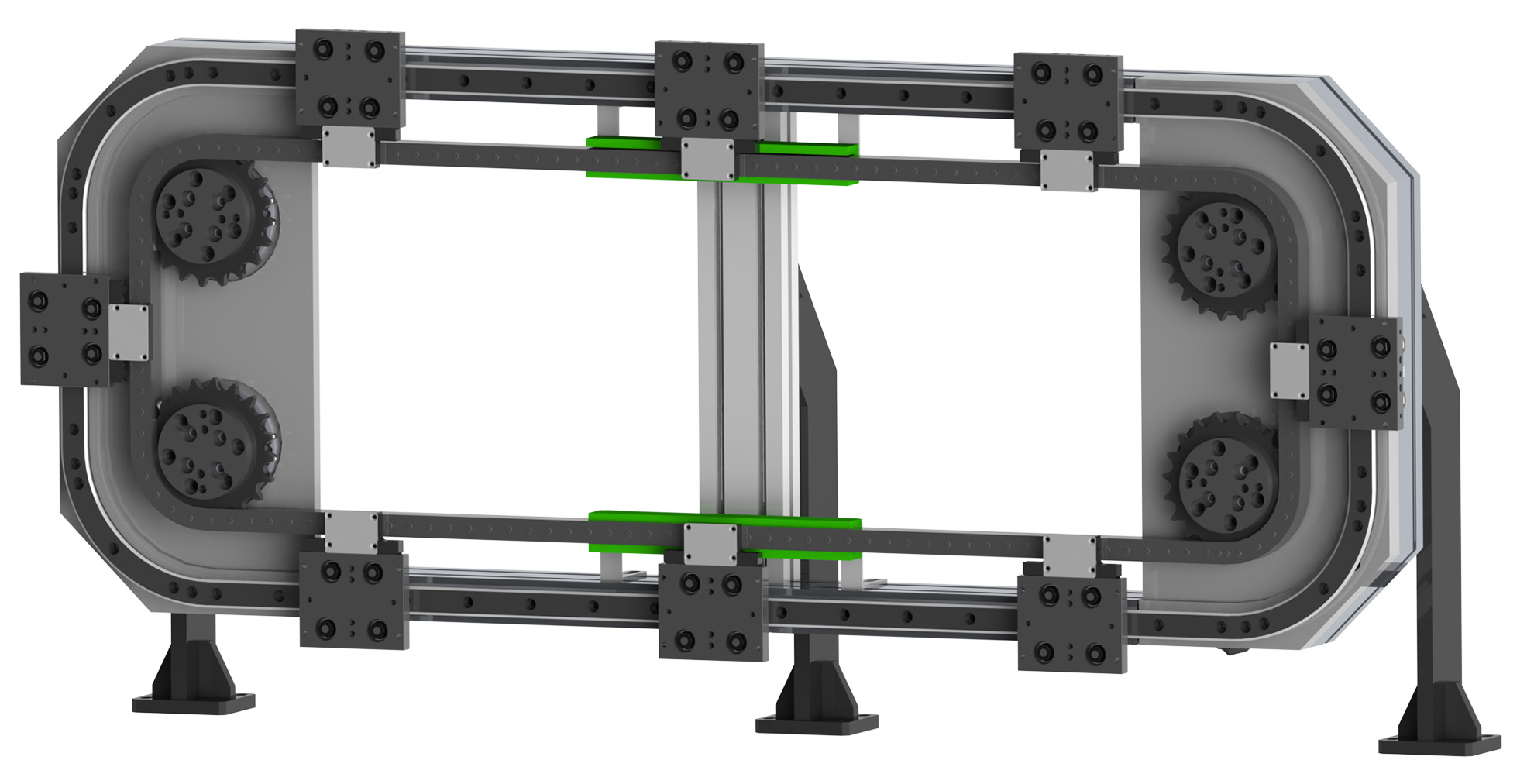
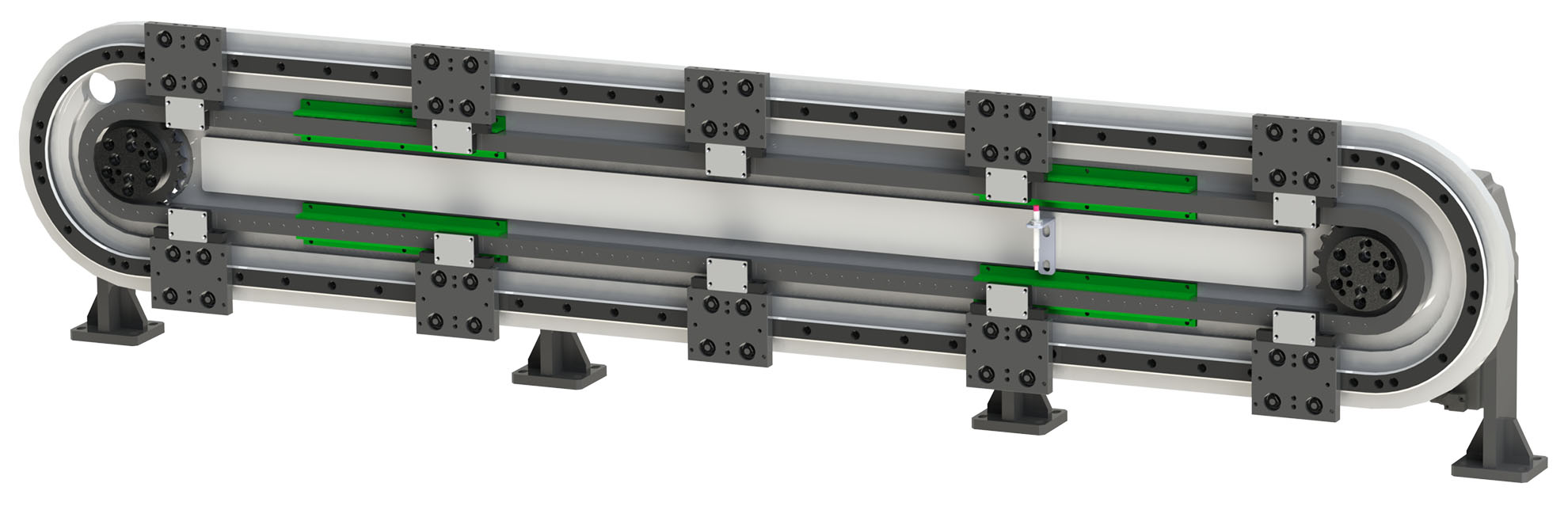
- •Vertical Elliptical Loop Rail: Predominantly utilized in linear indexing systems. This configuration offers an optimal balance between spatial efficiency and cost-effectiveness for back-and-forth transfer applications.
- •Vertical Rectangular/Square Loop Rail: Employed in layouts necessitating orthogonal path geometry and 90-degree transfer points.
- •Vertical Circular Loop Rail: Designed for continuous rotary motion or tight-loop circulation in compact spaces.
2.2 By Drive & Transmission Technology
- Synchronous Belt Drive: Recommended for light-to-medium load applications demanding high positional accuracy (±0.1mm or better) and high cycling rates. Huiside’s implementation couples high-precision belts with servo drives for dynamic synchronization, ensuring smooth motion and repeatable positioning.
- Chain Drive: Suited for medium-to-heavy load conveyance over longer distances. Provides robust durability and reliable performance in demanding environments.
- Rack and Pinion Drive: The solution for applications requiring extreme rigidity, high thrust capacity, and precise positioning under heavy loads.
- Cam-Driven Indexing: Provides a mechanical solution for fixed, high-accuracy intermittent motion with precisely defined dwell periods.
2.3 By Structural Configuration
- Single-Guideway System: A compact architecture ideal for applications with small-to-medium payloads and where space is at a premium.
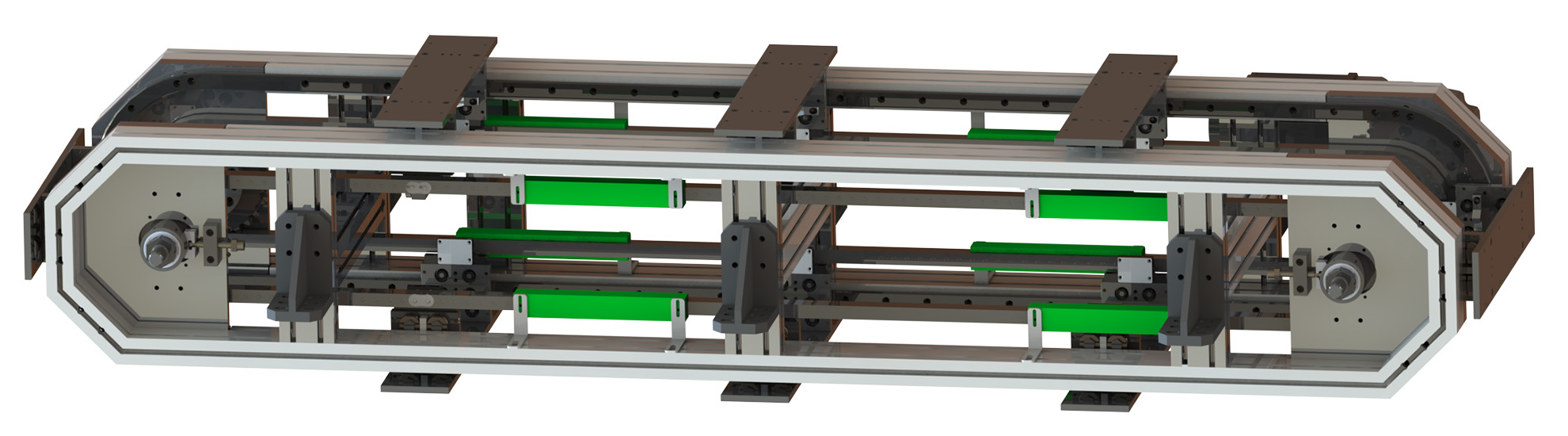
- Dual-Guideway System: Engineered for medium-to-heavy loads and applications mandating superior moment load capacity and trajectory stability. Huiside’s integrated dual-guideway solution features a rigid monoblock or a precision-adjustable subplate, guaranteeing parallel alignment and synchronous movement of both rails, thereby eliminating the calibration complexities inherent in modular dual-rail assemblies.
3.0 Performance Characteristics & Engineering Considerations
When evaluated against horizontal or overhead-mounted loop rails, VCR systems present distinct operational and design attributes:
- Optimal Spatial Utilization: Vertical orientation reduces the required floor space by >50% compared to equivalent horizontal systems, maximizing facility layout efficiency.
- High Dynamic Performance: Engineered for rapid, stable acceleration/deceleration and precise stop positioning (±0.05mm repeatability achievable) on vertical or inclined paths.
- Broad Load & Application Scope: Configurable to handle a wide spectrum from gram-level precision components to ton-scale assemblies.
- Critical Installation & Alignment: System performance is heavily contingent upon precise installation, particularly the leveling and synchronization in dual-guideway setups. Huiside Automation mitigates this through turnkey engineering services—from kinematic design and FEA-based structural analysis to supervised installation and commissioning—ensuring deployed systems meet specified performance benchmarks.
4.0 Industry Applications
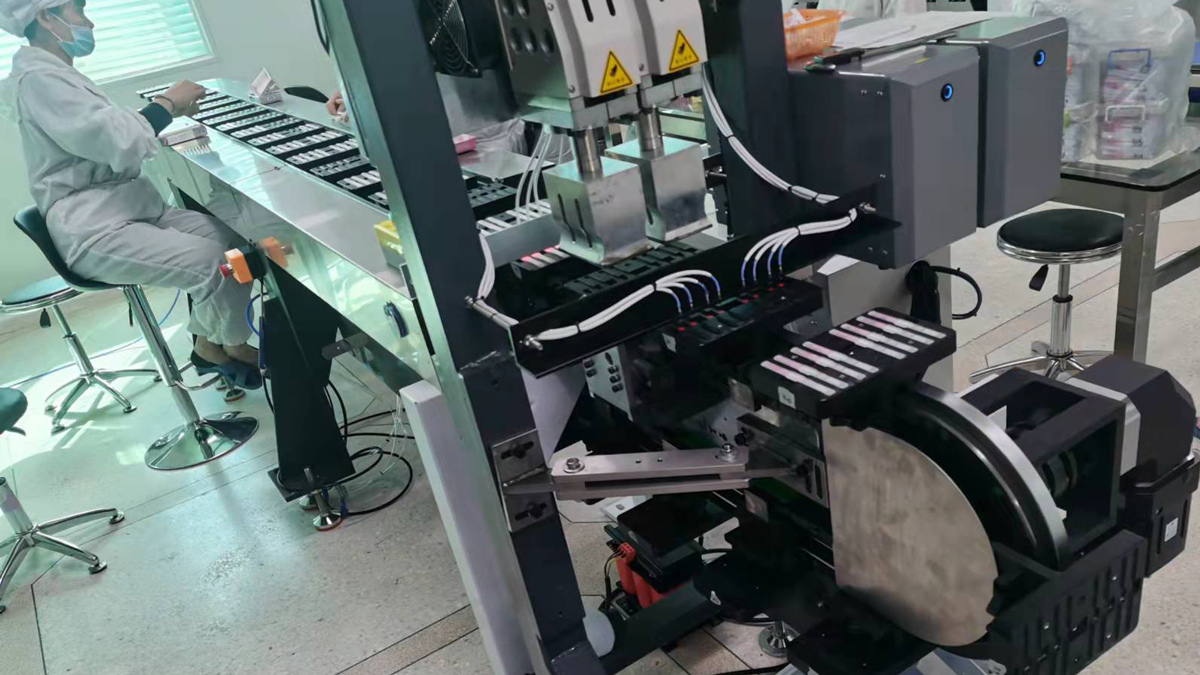
As a core component of advanced automation cells, VCR systems are deployed in high-precision, high-throughput sectors:
5.0 Huiside Automation VCR Solution Portfolio
Huiside Automation delivers vertically-integrated VCR solutions that consolidate design, manufacturing, and control expertise:
- Modular & Scalable Design: A comprehensive portfolio of standardized VCR modules enables rapid system configuration and scalability.
- Structural Integrity: Designs are optimized via simulation for vertical dynamic loading, utilizing high-stiffness alloys and architectures to ensure minimal deflection at operational speeds.
- Precision Motion Integration: Compatible with leading servo/stepper drives and integrated with Huiside’s proprietary motion controller for synchronized multi-carrier control and complex sequence management.
Full-Lifecycle Support: End-to-end partnership from feasibility study and system design to build, integration, installation qualification (IQ), and operational qualification (OQ), backed by global technical support.
6.0 Summary
The Vertical Circulating Rail System represents a strategically superior solution for capital-intensive manufacturing spaces, enabling significant gains in floor space productivity and transfer efficiency. For applications with stringent requirements in speed, accuracy, payload, and layout complexity, collaboration with a technology integrator like Huiside Automation—possessing deep domain knowledge and full-system capability—is paramount to ensuring long-term system reliability, performance sustainability, and a demonstrable return on investment in the era of smart, adaptive manufacturing.





 Add time:2026-06-05
 clicks:
 Previous:
 BACK
BACK